Why Is My Curly Hair So Frizzy? 9 Real Reasons (and How to Fix Each One)

You did everything right.
You used gentle shampoo. You conditioned thoroughly. You applied your leave-in on soaking wet hair the way every tutorial told you to. You scrunched, not raked. You plopped. You waited.
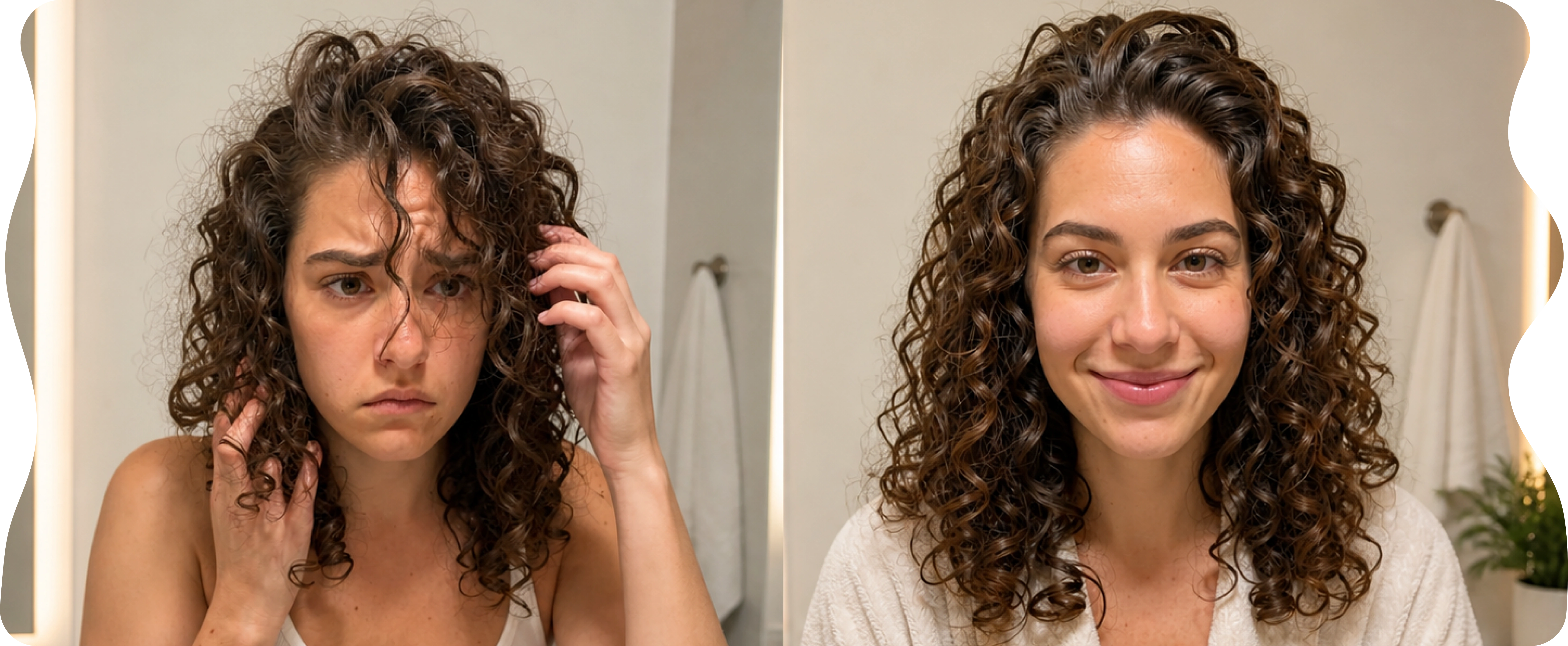
And your curls are still frizzy.
If this is a familiar experience, you are not alone, and more importantly, you are not doing it wrong. The real reason so many curly girls spend years chasing definition and never quite reaching it has very little to do with technique and a great deal to do with forces that most curl guides never address: the world you are living in, the air you are breathing, the water coming out of your tap, and the invisible accumulation of modern life pressing against the biology of your hair every single day.
Frizz is not a character flaw. It is a signal. And once you understand what it is actually signalling, the question of why is my curly hair frizzy stops being a source of frustration and becomes a roadmap. Each answer points directly to a solution.
Here are the nine real reasons your curls frizz, why each one is more complex and more contemporary than the standard answers suggest, and exactly what to do about each one.
1. Your Hair Is Chronically Dehydrated at the Cellular Level
The explanation you have probably heard before is that frizz is caused by dryness. This is true but it is also incomplete in a way that keeps most people stuck.
The distinction that matters is between surface dryness and cortical dehydration. Surface dryness is what a conditioner addresses. It coats the outer cuticle layer, gives the hair a softer feel, and temporarily reduces friction between strands. Cortical dehydration is what happens inside the hair shaft when the lipid content of the fibre has been depleted over time by sulfates, heat, and harsh environmental conditions.
When the cortex is dehydrated, the hair cuticle cannot lie flat even when surface conditioners are applied, because the internal structure that supports the cuticle's position is compromised. This is why frizz that originates from cortical dehydration does not fully respond to regular conditioning. The surface product is trying to smooth a roof whose foundations have shifted.
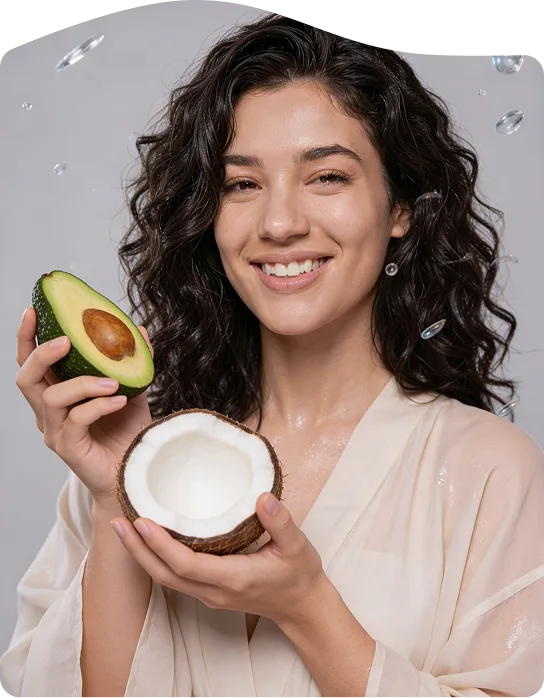
The fix requires an ingredient that actually penetrates the shaft rather than coating it. Avocado oil, one of the hero ingredients in Parachute Advansed Hydra Curls, is one of the very few oils with a molecular structure small enough to enter the hair cortex. Its high oleic acid content restores the internal lipid layer that dehydration has depleted, addressing frizz at its structural origin rather than its surface expression.
2. Air Pollution Is Quietly Destroying Your Curl Pattern
This is the reason almost nobody talks about, and it may be the most significant one for women living in Gulf cities, across urban India, or anywhere that air quality is a daily consideration.
Particulate matter, the microscopic combination of dust, chemical compounds, industrial emissions, and combustion byproducts that constitutes modern urban air pollution, does not simply drift past your hair. It deposits on the hair surface and within the cuticle layer, where it creates oxidative stress. Oxidative stress is the same mechanism that causes biological ageing in cells, and it causes something analogous in hair fibre: the progressive breakdown of the protein bonds and lipid structures that give curls their shape, elasticity, and ability to resist humidity.
A study published in the International Journal of Cosmetic Science found that hair exposed to significant air pollution showed measurably higher levels of protein degradation and lipid surface damage compared to hair kept in clean air environments. For curly hair, which already has a more complex cuticle architecture than straight hair and a greater structural vulnerability to protein loss, this pollution-driven oxidative stress accelerates the breakdown of the very bonds that create curl definition.
That is why we chose Avocado oil, which is present in Hydra Curls, and contains vitamin E in significant concentrations, one of the most effective naturally occurring antioxidants known to hair science.
3. Hard Water Is Coating Every Strand You Have
Hard water is tap water with a high concentration of dissolved minerals, primarily calcium and magnesium. Much of the Gulf region and large parts of the Middle East and South Asia have moderately to severely hard water supplies, which means that if you are washing your hair at home, you may be depositing a fine mineral coating on your hair every single time you rinse.
That mineral coating does two things. First, it physically prevents moisture from entering the hair shaft by blocking the cuticle's ability to open properly. Second, it gradually builds up into a layer of residue that dulls the hair, reduces elasticity, and creates the rough, raised cuticle surface that causes light to scatter rather than reflect, which is the optical origin of the frizzy appearance.
The fix begins with a clarifying wash once a month to remove mineral buildup, followed by an apple cider vinegar rinse if accessible, which helps to lower the pH of the hair surface and encourage the cuticle to close smoothly after washing. The use of a filtered shower head, where possible, reduces the ongoing mineral load significantly.
4. Chronic Stress Is Affecting Your Scalp Environment
The relationship between psychological stress and hair health is one of the most fascinating and underreported areas of modern trichology.
When the body is under chronic stress, cortisol levels remain persistently elevated. Elevated cortisol disrupts the hair growth cycle, shifts hair follicles prematurely from the growth phase into the resting and shedding phases, and compromises the function of the sebaceous glands in the scalp. Those sebaceous glands are responsible for producing sebum, the scalp's natural oil, which is the primary source of lubrication for the hair shaft and the first line of defence against the dryness that causes frizz.
When sebum production is disrupted by chronic stress, the hair shaft receives less of the natural oil that would otherwise travel down from the scalp to coat and protect each strand. For curly hair, where this journey is already structurally difficult because of the bends and spirals of the hair shaft, even a small reduction in sebum output has a disproportionate effect on the hair's moisture levels.
The fix here is not reducible to a product, though the right products can compensate for reduced natural oil production. Deep conditioning with ingredients that replicate the protective function of sebum, including coconut extract, which is structurally similar to the fatty acids in sebum, can bridge the gap between what a stressed scalp is producing and what the hair needs.
5. You Are Using Products With Hidden Humectant Problems
Not all humectants behave the same way, and some of the most commonly used ones in curl products can actually worsen frizz rather than address it under specific atmospheric conditions.
Glycerin, one of the most widely used humectants in hair care, draws moisture from the surrounding environment to the hair surface. In humid conditions, this works beautifully: there is plenty of atmospheric moisture for glycerin to capture, and the hair stays hydrated. But in very dry conditions, when the air contains less moisture than the hair itself, glycerin reverses its behaviour. It draws moisture out of the hair fibre and releases it into the dry air, leaving the hair drier than it was before the product was applied.
The fix is to choose products that use humectants with more sophisticated moisture management behaviour. Hyaluronic acid, a central ingredient in Hydra Curls, manages moisture dynamically, responding to the hair's actual needs rather than simply the atmospheric moisture level, which makes it significantly more reliable across the range of conditions GCC curly girls encounter daily.
6. Your Protein and Moisture Balance Is Off
Curly hair requires a precise balance between protein and moisture to maintain its structural integrity and definition. Too little protein and the hair becomes limp, overly stretchy, and unable to hold its curl pattern. Too much protein without adequate moisture and the hair becomes brittle, stiff, and paradoxically prone to breakage and frizz.
Most people are aware of the moisture side of this equation but significantly underestimate how much their current product regimen may be pushing them toward protein overload. Hydrolysed proteins are present in a very large number of curl products, including leave-ins, gels, and styling creams, and their cumulative effect can tip the balance over time.
The fix requires periodic assessment of how your hair feels and responds. Hair that feels crunchy, sounds almost squeaky when handled wet, or breaks more than stretches when pulled gently is likely protein-overloaded. Reducing protein input and increasing deep moisture treatments with penetrating oils like avocado and coconut will begin to restore the balance over several wash cycles.
7. You Are Not Protecting Your Hair From UV Damage
The sun in the GCC is not the temperate sun of Northern Europe or the Pacific Northwest. It is intense, prolonged, and present across most of the year at levels that cause measurable structural damage to unprotected hair fibre.
UV radiation breaks down the melanin in hair and, more significantly for curl health, degrades the disulfide bonds that give curly hair its shape. Disulfide bonds are the molecular architecture of the curl pattern: they are what causes the hair to spring back into its spiral shape after being stretched. When UV exposure progressively damages these bonds, curls lose their definition, become increasingly frizzy, and require progressively more product to achieve the same results.
The fix involves both protective styling choices and formulation. Products containing vitamin E, which functions as a UV-protective antioxidant at the hair fibre level, provide meaningful protection against ongoing UV-induced bond degradation. Avocado oil, with its high vitamin E content, brings this benefit to the Hydra Curls formulation in a way that is intrinsic to the product rather than added as a synthetic UV filter.
8. Your Drying Method Is Introducing Frizz After Perfect Application
The drying method undoubtedly remains one of the most underdiagnosed problems in the curly hair community.
This method introduces frizz in two primary ways. The first is towel rubbing: the friction of a standard cotton towel against wet, cuticle-open hair creates microscopic damage along the cuticle edge that manifests as visible frizz once the hair dries. The second is touching the hair before the styling gel cast has fully formed, which breaks the cast in an uneven way and leaves sections of the hair unprotected against humidity.
The fix is a plopping technique using microfibre or cotton T-shirt fabric, followed by hands-off drying (either air-drying or diffusing on low heat) until the hair is fully and completely dry before any scrunching or manipulation occurs.
9. Your Formulation Was Not Built for Your Hair
This is the reason that sits underneath all the others. Frizz that persists despite correct technique, despite the right methods, despite genuine effort and genuine investment, is very often frizz that persists because the products being used were designed for a different kind of hair in a different kind of place.
The beauty industry spent the better part of the 20th century developing curl care products for hair types and climate conditions in the West. Arab curly, wavy, and coily hair has its own structural characteristics, its own porosity patterns, its own relationship with the particular humidity and heat of the Gulf, and its own history of being underserved by formulations that arrived in its markets from elsewhere and never quite fit.
This is the specific gap that Parachute Advansed Hydra Curls was designed to address.
The formulation brings together avocado oil, which penetrates the cortex to restore the structural lipid layer that modern life and GCC conditions deplete; coconut extract, which protects the hair's protein structure from the cumulative damage of washing and environmental stress; and hyaluronic acid at multiple molecular weights, which manages moisture dynamically across the range of conditions that a day in the Gulf can contain.
No sulfates that strip the natural oils the hair needs. No silicones that create the buildup that prevents real moisture from reaching the shaft. No ingredients that create short-term cosmetic results at the cost of long-term structural integrity. Just a formulation built with the specific understanding that curly hair in this part of the world has been waiting for something that was genuinely made for it.
The 48-hour hydration claim is not a marketing number. It is a reflection of the hyaluronic acid's dynamic moisture management capacity, which continues working after wash day ends, responding to changes in the hair's moisture environment rather than simply coating the cuticle and washing out at the next shower.
THE HONEST ANSWER TO WHY IS MY CURLY HAIR FRIZZY
The honest answer is that your curly hair is frizzy because it is living in the 21st century.
It is breathing air that carries pollution at concentrations no generation of curly girls before this one has encountered. It is being washed in water that carries a mineral load unknown to the communities whose traditional hair care practices we now look to for inspiration. It is navigating stress levels that affect the scalp in ways that only recently became scientifically understood. It is coping with UV exposure that degrades the molecular architecture of the curl pattern faster than any conditioning treatment can repair.
And it has been doing all of this with products that were not designed with any of those realities in mind.
The nine reasons above are not a list of failures. They are a list of challenges that your hair has been meeting, without adequate support, for far too long.
Parachute Advansed Hydra Curls was built with the full understanding of what curly hair in this climate, in this time, is actually up against. Not just the needs of the hair in isolation, but the needs of the hair as it exists in the real world: in humid summers and air-conditioned winters, in polluted urban air and hard municipal water, in lives that carry stress and schedules that demand quick wash days.
Your curls deserve a formulation that was built for all of it. That is exactly what this one is.